Done well, trivia night books tables, fills the slow middle of the week, and builds a crowd of regulars who come back to defend their standing. Done badly, it drags, the answers get argued, and people leave early. The difference is almost entirely in the format and the pacing, and both are easy to get right once you know what to aim for. Here is the whole thing, start to finish.
The format that works
The reliable structure is four to five rounds of about ten questions each, running roughly ninety minutes to two hours. Mix the categories so no single team runs away with it: general knowledge, music, a picture round, a wildcard, and one themed round. Between rounds, collect answers and read the running scores out loud. That between-rounds beat is where the energy lives, so never skip it, it is the part that makes trivia feel like a show rather than a worksheet.
Keep a clear difficulty curve inside each round. Open with something almost everyone gets, to build confidence and get the table talking, then climb toward one or two genuine stumpers. A good hard question makes the table that misses it say "oh, of course," not "how would anyone possibly know that."
Questions: keep them fair and fresh
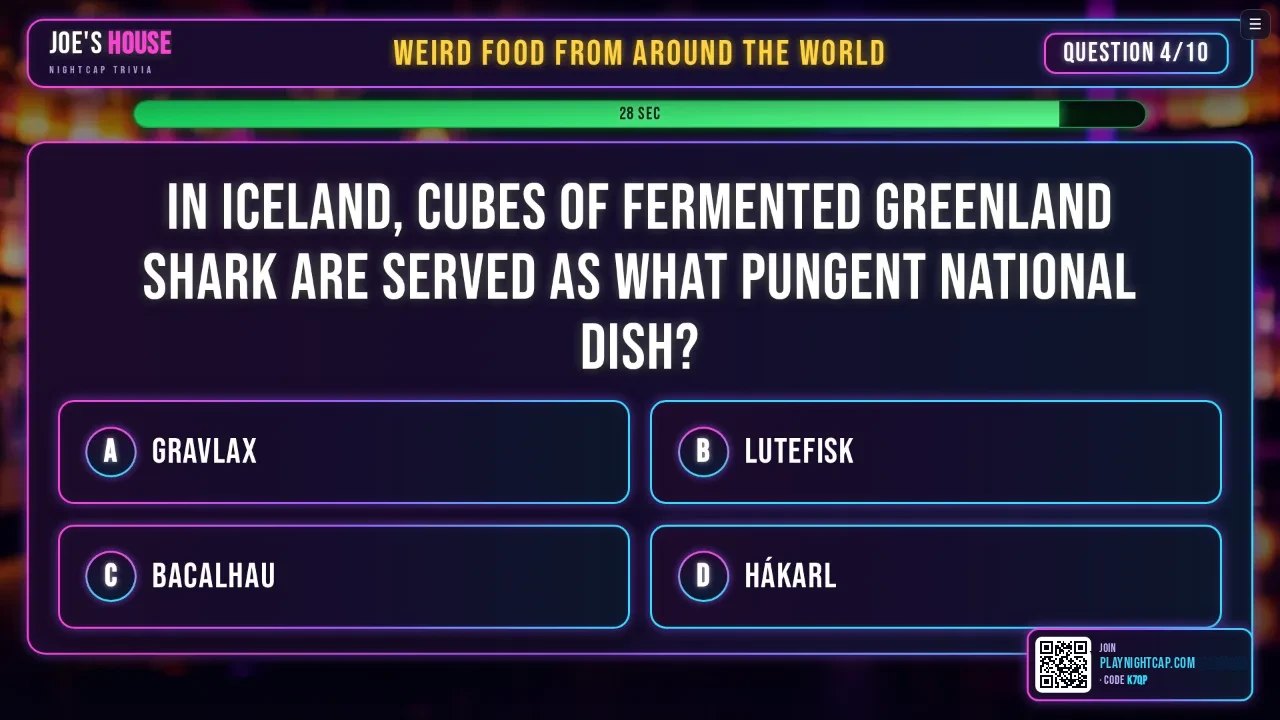
The fastest way to kill trivia is questions that are too obscure, unfair, or recycled from last month. Your regulars will notice a repeat immediately, and nothing deflates a room faster. You need two things: a sensible difficulty spread within each round, and a deep, rotating bank so nobody sees the same question twice in a season.
Writing forty to fifty fresh, well-calibrated questions every single week is a genuine part-time job. It is the main reason bars burn out on running trivia themselves. A tool with a large library and built-in theme nights removes that entirely. Our own AI-hosted trivia ships with thousands of questions across categories and rotates them for you, so the material stays fresh without you writing a single line.
Scoring without the arguments
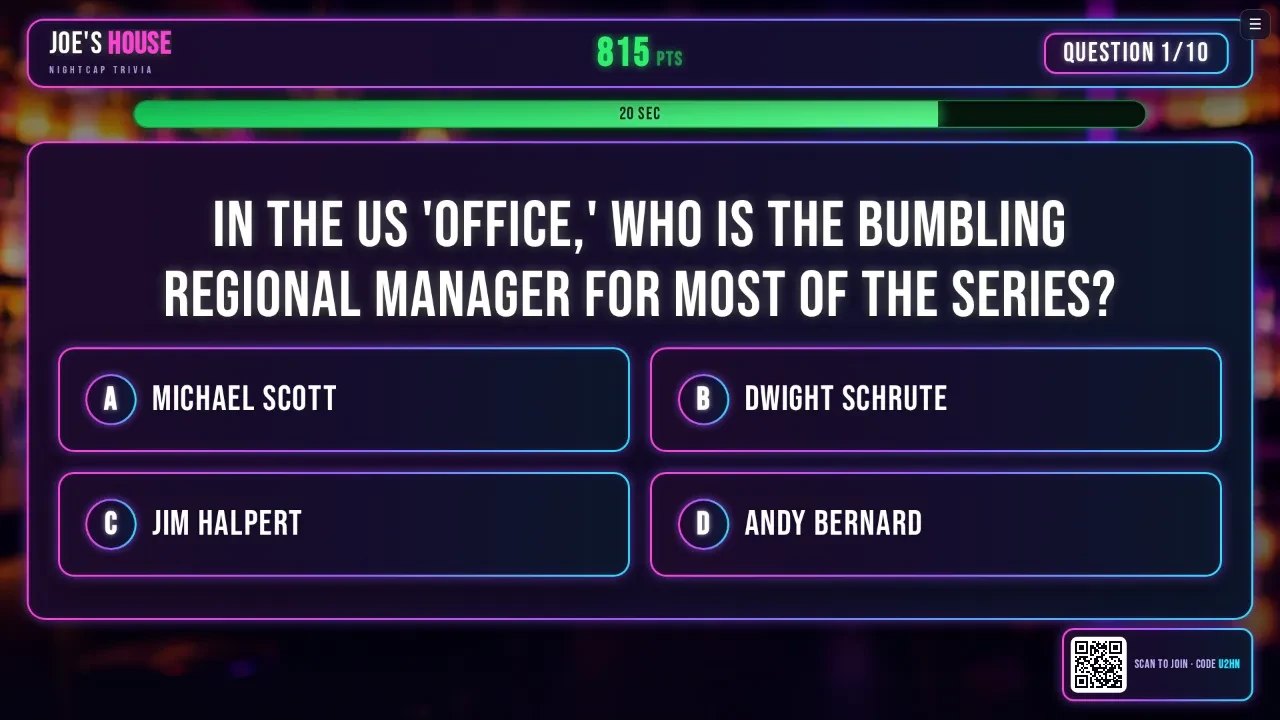
Manual scoring is where trivia nights go to die: swapping answer sheets, disputed spellings, arithmetic errors at the bar while the room waits. Whatever system you use, make scoring fast and transparent. If you run it on paper, have teams swap and grade each other's sheets to spread the work and reduce cheating. If you run it digitally, the app tallies instantly and shows a live leaderboard on the TV, which removes the disputes entirely and makes the reveal the most exciting moment of each round.
Prizes and stakes that bring people back
The prize does not need to be expensive. A bar tab, a round on the house, or a small gift card is plenty. What matters is that winning is public and repeatable. Put the winning team up on the screen, and keep a running monthly or seasonal champion so there is something to chase week over week. Status is the real prize, and a team in second place all month is a team that keeps coming back.
Promote it like a weekly habit
An event nobody knows about is an empty room. Cover the basics and let them compound:
- List it as a recurring event on your Google Business Profile so you catch "trivia near me" searches.
- Post it in your Instagram highlights and any local event calendars.
- Put a table tent or chalkboard out on other nights pointing to trivia night.
- Email or text your regulars each week, and collect new sign-ups every night.
For the full promotion and habit-building playbook, see our guide to filling slow weeknights.
Do you actually need a host?
Traditionally, yes, and a great human host is worth a lot. But the host is also the most expensive and least reliable part of trivia night. They cost seventy-five to two hundred dollars a night, quality varies, and a cancellation can sink your event with no notice. The modern alternative is an AI host that reads every question aloud in a real voice, keeps the pace, banters between rounds, and reacts to how teams are doing, all running on your existing TV while teams answer from their phones. It shows up every week and never calls in sick.
Let an AI host run the night for you
Nightcap puts trivia, bingo, and poker on the TV you already own and lets patrons play from their phones. Nothing to download, no login. No host to hire, no equipment to buy. Every game is free for 30 days.
Start free trial →Your week-one checklist
- Pick a night and commit to it weekly for at least a month.
- Set the format: four to five rounds, teams capped at six, about two hours.
- Line up your questions, or use a tool with a built-in library and theme nights.
- Decide the prize and how you will show the winner on screen.
- Promote it across Google, socials, in-house signage, and your email list.
- Pair it with one memorable food or drink special.
If you want the fastest possible setup, you can have Nightcap trivia running on your TV tonight, with the host, the questions, and the scoring all handled for you.
Frequently asked questions
Do I need to hire a trivia host?
No. A good human host is worth a lot, but they cost seventy-five to two hundred dollars a night, can cancel, and vary in quality. An AI host reads every question aloud in a real voice, keeps the pace, and reacts to the room, running on your existing TV. It never no-shows.
How long should trivia night last?
Around ninety minutes to two hours: four to five rounds of about ten questions, with a short scoring break between each round. Much longer and teams drift; much shorter and it does not feel like an event worth coming out for.
How many questions do I need?
Roughly forty to fifty per night, and a much deeper bank so you are not repeating yourself week to week. Writing that volume by hand is real work, which is why many bars use a tool with a large built-in question library and theme nights.
How big should teams be?
Cap teams at around six. Bigger tables turn into a side conversation and stop paying attention, and very large teams have an unfair edge. Six keeps everyone engaged and keeps scoring fair.
What should the prize be?
It does not need to be big. A bar tab, a round on the house, or a small gift card is plenty. What matters is that winning is public and repeatable, so keep a running monthly champion to give teams something to chase.