Bingo has quietly become one of the best weeknight draws in the bar business. It is simple enough that anyone can play on their first visit, it moves quickly, and it reaches a broad, often older crowd that a hard pub quiz can leave out. It also pairs naturally with drink specials, because there is a built-in pause between every game. Here is how to run it so it actually packs the room.
The format
Plan for six to ten short games across about ninety minutes. Vary the winning pattern to keep it interesting: a single line, then four corners, then an X or a T, then a full-card blackout as the finale. Announce the pattern clearly before each game and show it on the screen so nobody is confused about what they are chasing. Frequent, short games mean frequent winners, and every win is a natural moment to celebrate on the mic and move another round.
Paper or digital?
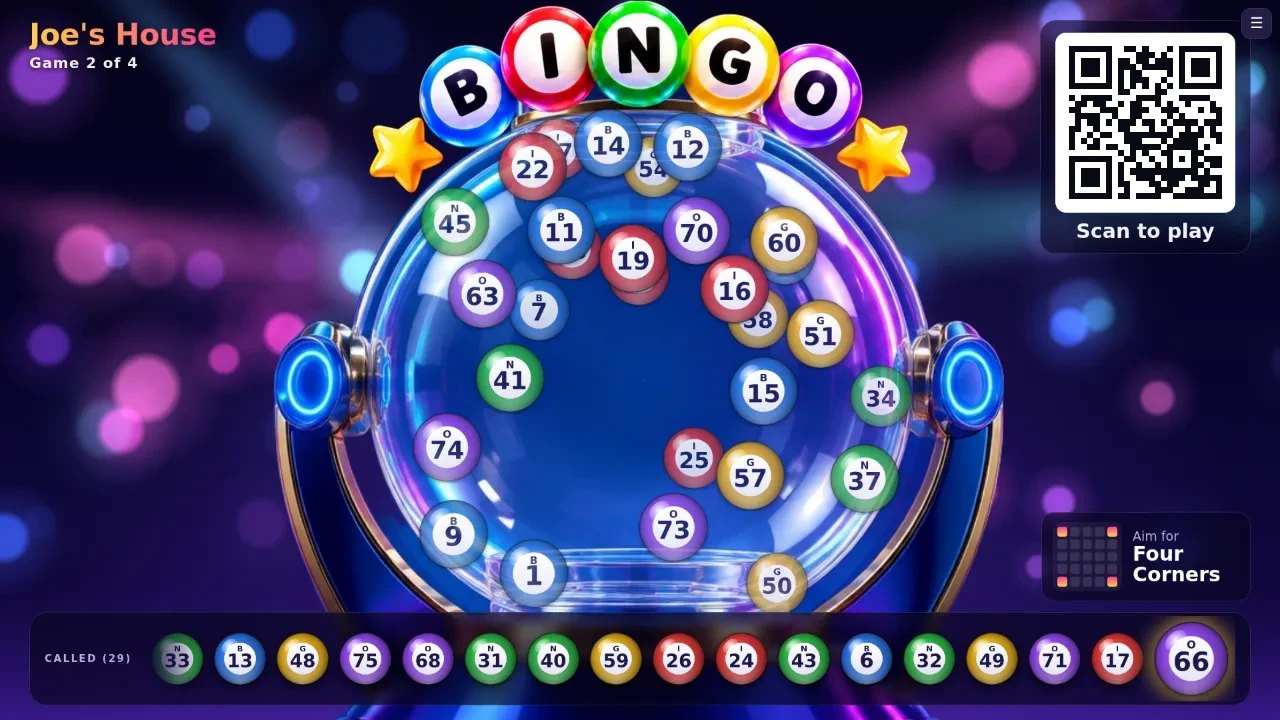
Traditional bingo means printing and handing out paper cards, buying daubers, and manually checking wins. It works, but it is a hassle, it is messy, and it caps how fast you can run. Digital bingo, where each patron gets a card on their phone and daubs with a tap, removes the printing, the mess, and most of the disputes. It also lets latecomers join in seconds, which is exactly what you want on a walk-in weeknight. With Nightcap bingo the caller runs on your TV and there is nothing to download: players just scan a code.
Calling and verifying wins
The caller sets the mood. A flat, robotic call drains the room; a caller with personality and patter builds it, teasing the crowd and ramping the tension as cards fill up. This is the part guests remember and the reason a good bingo night feels like a show. If you do not have a natural showman on staff, an AI caller does exactly this in a real voice, which is a big part of why bars are moving to it.
Verifying wins is the other classic friction point. Someone shouts bingo, the room stops, and staff walk over to squint at a card while everyone waits. Digital bingo checks the card against the called numbers automatically and instantly, so there is no dead stop and no argument.
Prizes that fit bingo
Because you are running many short games, prizes work best when they are small and frequent. A free drink, an appetizer, or a small gift card per game keeps everyone in it, with a bigger prize saved for the blackout finale. Branded, share-ready prize cards, or even just the winner's name up on the screen, turn a win into social proof your regulars post for you.
Promote it like a weekly habit
- List it as a recurring event on your Google Business Profile to catch "bingo near me" searches.
- Post it in your Instagram highlights and local event calendars.
- Use in-house signage on other nights to point to bingo night.
- Email or text regulars weekly, and collect new sign-ups each game.
Bingo's broad appeal makes it especially good at pulling groups and older regulars who will build the night into their routine. For the full promotion playbook, see filling slow weeknights.
Let an AI host run the night for you
Nightcap puts trivia, bingo, and poker on the TV you already own and lets patrons play from their phones. Nothing to download, no login. No host to hire, no equipment to buy. Every game is free for 30 days.
Start free trial →Your bingo-night checklist
- Pick a night and run it weekly for at least a month.
- Plan six to ten short games with varied patterns, ending on a blackout.
- Decide small per-game prizes plus one bigger finale prize.
- Choose digital cards to skip the paper, daubers, and disputes.
- Promote across Google, socials, signage, and your list.
- Pair it with a simple drink special during the breaks.
If you want to skip the paper and the arguments entirely, Nightcap bingo runs the caller, the cards, and the win-checking for you on the TV you already own.
Frequently asked questions
Do I need paper cards and a caller?
No. Digital bingo puts a card on each patron's phone and an AI caller on the TV. There is nothing to print, no daubers to buy, and no one to hire to call numbers. Latecomers can join instantly, which matters on a walk-in weeknight.
How many games should a bingo night have?
Plan for six to ten short games across about ninety minutes. Short games mean frequent winners, which keeps energy high and gives you many natural moments to push a drink special.
How are wins verified so there are no disputes?
Digital bingo checks the winning card against the called numbers automatically and instantly, so there is no dead stop while staff walk over to eyeball a sheet, and no arguments across the room.
What prizes work best for bar bingo?
Small and frequent. A free drink, an appetizer, or a small gift card per game keeps everyone playing, with one bigger prize saved for a full-card blackout finale.
Is bar bingo considered gambling?
When patrons play for free and prizes are things like a drink or an appetizer rather than cash payouts tied to a buy-in, it generally sits outside gambling rules. Rules vary by area, so check your local regulations before adding any paid element.